Understanding diesel fuel costs: What owner-operators should know
July 29, 2026
By: Lee Whipp, Senior Director of Purchasing
Estimated reading time: 4 minutes
High diesel prices can greatly affect an owner-operator's profitability. Understanding what drives those costs will help you be prepared and better plan your fuel spend.
As someone who is involved with purchasing millions of gallons of fuel yearly for Schneider’s fleet, here’s my take on what owner-operators should know about diesel fuel costs, including what factors influence diesel prices and what you can do to save money.
Key takeaways
- Understand how diesel fuel costs affect profitability, since fuel is one of your largest variable operating expenses.
- Recognize what factors drive diesel fuel costs, so you’re better prepared when prices change at the pump.
- Do business with the right carrier to lower diesel expenses.
- Use fuel optimizer tools, calculate cost per mile and reduce deadhead miles to further reduce fuel costs.
How much does diesel fuel cost right now?
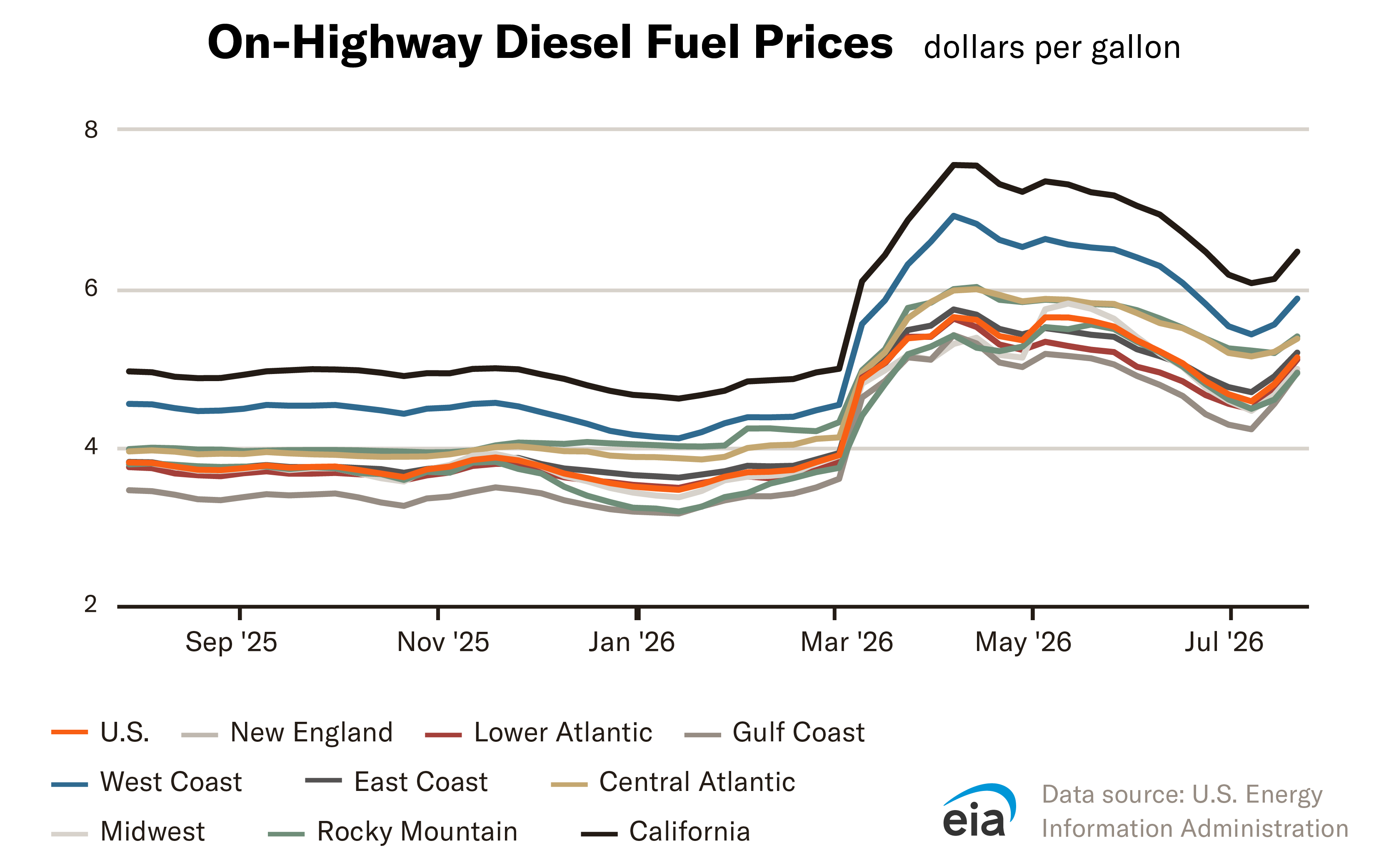
Data from the U.S. Energy Information Administration (EIA) shows the national average diesel price increased from about $3.46 per gallon on January 12, 2026, to a peak of $5.64 per gallon on May 4, 2026.
More recently, the EIA reported that diesel prices fell to $4.83 per gallon on June 22, 2026, but jumped above the $5.00 threshold to $5.13 per gallon on July 20, 2026.
Why does the cost of diesel fuel fluctuate?
There are many factors that cause fuel prices to rise and fall, including:
- Geopolitical events
- Supply chain disruptions
- Crude oil prices
- Refining capacity
- Seasonal demand
- Fuel regulations
Of these, geopolitical events often have some of the biggest and fastest impacts. It comes down to how crude oil moves around the world.
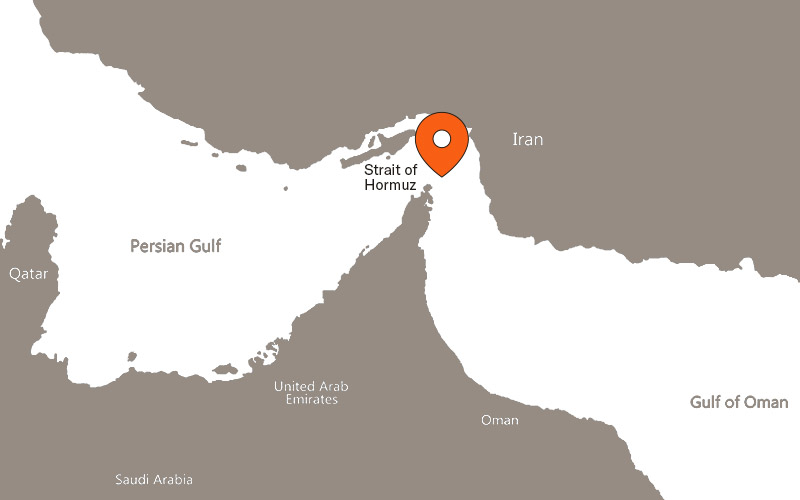
Much of the world’s crude oil moves through specific transit points, especially the Strait of Hormuz. According to the International Energy Agency, about 20 million barrels of crude oil and oil products pass through the Strait of Hormuz each day. That number accounts for roughly 25% of global seaborne oil trade. Because it’s such an important route, any disruption there can quickly affect global oil prices.
Since March 2026, geopolitical tensions have significantly reduced the amount of oil moving through the Strait of Hormuz. With less oil reaching global markets, fuel prices have become more volatile.
Why does diesel fuel cost so much in 2026?
The pricing trends we’ve seen recently show how sensitive the market is to supply constraints along major global shipping routes. When crude oil flow is disrupted, fuel costs tend to rise.
According to data from the EIA, less oil moving through the Strait of Hormuz has added to the increased price of semi-truck fuel in 2026.
As oil supplies tighten, many countries have started drawing from their reserves. In the United States, diesel inventory levels have dropped below the last five-year average. This decreased supply has contributed to higher fuel prices at truck stops.
Why do fuel costs hit owner-operators so hard?
Fuel is one of the largest variable costs for trucking owner-operators. Since fuel prices change so often, it can be hard to predict what you’ll spend on diesel each week. Those swings can also affect which loads will be the most profitable to haul. For example, a higher paying load with significant deadhead miles and high fuel costs might end up being less profitable than a lower paying load close to home.
Plus, when fuel prices rise quickly, fuel surcharge programs usually take time to catch up. That delay can squeeze margins and put short-term pressure on carrier profitability until surcharges fully align with fuel prices.
6 practical fuel cost strategies owner‑operators can use today
1. Do business with a carrier.
The right carrier can help make fuel costs more manageable for owner-operators and fleet owners.
Schneider, for example, supports owner-operators and small fleets by providing comprehensive fuel solutions through the Schneider Purchase Power Program®, including access to:
- Competitive fuel discounts
- A free fuel optimizer tool
- A Schneider-issued fuel card
- Fuel surcharge revenue
These capabilities enable owner-operators to better control one of their largest variable costs while improving overall operational efficiency.
2. Leverage fuel optimizer tools.
Semi-truck fuel costs vary greatly across different states and regions; not to mention truck stop pricing can fluctuate multiple times throughout the day.
Fuel optimization tools, like fuel cards and fuel apps, help owner-operators manage these variances by guiding them to the most cost-effective fueling locations. These tools incorporate key factors such as:
- Real-time pricing
- Discount networks
- State-level tax impacts
3. Calculate your cost per mile.
Cost per mile will show how much revenue you need to generate per mile to make a profit. This is especially important when operating costs, like fuel, are up.
I suggest tracking your fixed and variable expenses for the month in a spreadsheet. Then, you can calculate your cost per mile to see if there are areas where you can save money.
4. Reduce deadhead miles.
Every mile you run without a trailer or with an empty trailer burns fuel without putting any money back in your pocket. And with high fuel prices, deadhead miles can significantly impact your bottom line.
As you plan what loads to haul, consider how many deadhead miles you’d need to run and how much it’ll cost you in fuel. You might find it’s worth it to pick up a lower paying load closer to home instead.
5. Adjust fuel surcharges.
If you operate under your own authority, make sure you’re adjusting fuel surcharges to compensate for current diesel prices.
If you do business with a carrier, the carrier will likely take care of fuel surcharges for you.
6. Keep up with preventative maintenance.
It may be tempting to put off preventative maintenance to save money, but staying on top of it can help you avoid expensive repairs and unexpected downtime.
Follow your truck manufacturer’s recommended preventative maintenance intervals to ensure everything stays in good condition.