Is being an owner-operator worth it for your lifestyle?
May 27, 2026
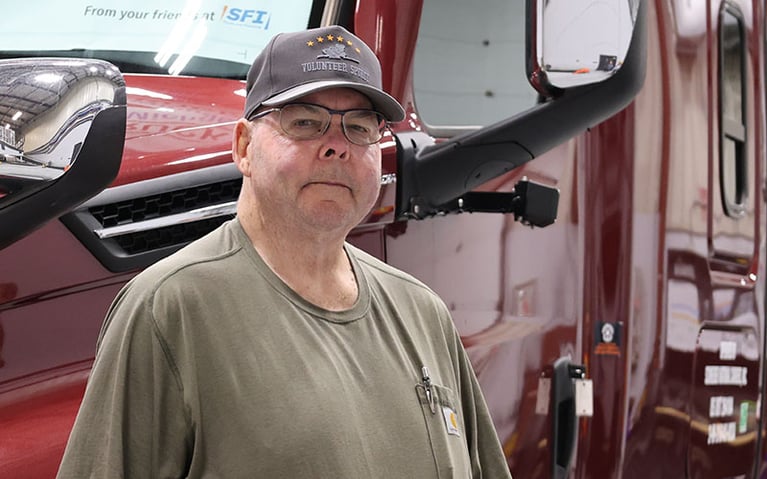
By: Michael Adams, owner-operator
Estimated reading time:5 minutes
If you’re a company truck driver, you’ve likely considered the idea of becoming an owner-operator. I know I did!
With more than two decades of experience owning a trucking business, people often ask me if being an owner-operator is worth it. The answer comes down to what you value most and how much effort you’re willing to put in.
Here are my honest thoughts on the lifestyle, the trade-offs and what it takes to succeed.
Key Takeaways
- The owner-operator lifestyle offers more freedom and control but also comes with extra responsibilities.
- The biggest shift from a company driver to an owner-operator is learning to think like a business owner.
- The ultimate answer to “is being an owner-operator worth it?” depends on how much you value independence and hard work.
Why I became an owner-operator
My trucking career began in 1995 as a company driver at Schneider. While I had experience driving straight box trucks in the U.S. Army, that was my first job as an official semi-truck driver.
But after eight years of working as a company driver, I knew it was time for a change. In the summer of 2003, I took the next step in my career: I became an owner-operator and leased my first truck. More than 20 years later, I’m still running my own trucking business (and am on my ninth truck lease!).
I didn’t become an owner-operator because I expected to make millions of dollars. The thing I wanted most? Freedom. I liked driving, and I still do. I’m good at it. But what I really craved was independence. Running my own business and operating my own truck gave me that.
The shift from company driver to owner-operator
Making the transition from a company driver to an owner-operator is a big change.
As a company driver, your main concern is how many miles you run each week. When you become an owner-operator, you’re suddenly faced with the business side of trucking.
For me, this meant I had to quickly learn how to:
- File my own taxes
- Buy my own fuel
- Stay on top of regular truck maintenance
- Find profitable loads to haul
- Track my truck and business expenses
One of the biggest challenges when you first become an owner-operator is managing your fixed and variable costs. Every week, you need to generate enough revenue to cover all those expenses while still earning a living.
The advantages of being an owner-operator
The best part of being an owner-operator is the freedom and flexibility it offers.
Instead of running someone else’s truck, I’m operating my own. If my next load isn’t ready when I need it to be, I can just go home. If I need an extra day off to rest or spend time with my family, I can take the extra day without asking permission. A company driver can’t do those things.
The trade-offs of being an owner-operator
Being an owner-operator doesn’t mean you work less. In fact, I’d say you work more.
Yes, you do have more control over your time and schedule than you did as a company driver. But you still need to generate enough revenue to pay your weekly expenses and make a profit. Want to take a vacation? You'll need extra funds in your account to cover your financial responsibilities while you're off. Freight is terrible right now? You’ll need to run twice as hard to make ends meet. Freight is great right now? You’ll still need to run just as hard to take advantage of the opportunity.
Running a trucking business is a big responsibility, but I still find it rewarding knowing that it’s something I own completely.
What it takes to succeed as an owner-operator
Being a successful owner-operator takes hard work, determination and a lot of commitment.
You need to step into this role with the mindset that things are not always going to go your way, especially when you’re just starting out. Trucks break down. Markets shift. Weather delays happen. It’s easy to throw your hands up and give up. But if this is what you really want, you must be willing to fight through tough days.
As you ask yourself, “is it worth being an owner-operator truck driver?” keep in mind that success looks different for everybody. For me, success is having a house and keeping what I’ve worked hard to build.
My advice before you take the leap
For those considering the switch from company driver to owner-operator, I encourage you to ask yourself a few questions:
- Why do you want to become an owner-operator?
- Are you looking for more independence and the ability to build something of your own? Or do you think being your own boss means you won’t have to follow the rules? (Spoiler alert: You still do.)
- Are you sure you want to stay in the trucking industry?
- Would you enjoy the responsibilities that come with owning a business, or would you find them overwhelming?
If you think owning a trucking business is the right move for you, I highly recommend getting a feel for the costs first. Treat your current company truck like it's your own and start tracking expenses as if you're already an owner-operator.
Here's how:
- Write down how much fuel you use each week and calculate what it would cost if it were coming out of your pocket.
- Find out what the shop charges for standard maintenance when you take your truck in.
- Call a shop to find out the price for a new set of steer and drive tires.
- Ask someone at your company how much insurance costs for you and your truck.
If you run those numbers and still feel that fire to run your own business, then you might just have what it takes to succeed. But at the end of the day, you’re the only one who can decide whether being an owner-operator is worth it for your lifestyle and career goals.